
中国梦之声
Ecuadorian president to pay state visit to China; trip to consolidate high‑level mutual trust, forge more cooperation consensus: expert_我的网站

一 |
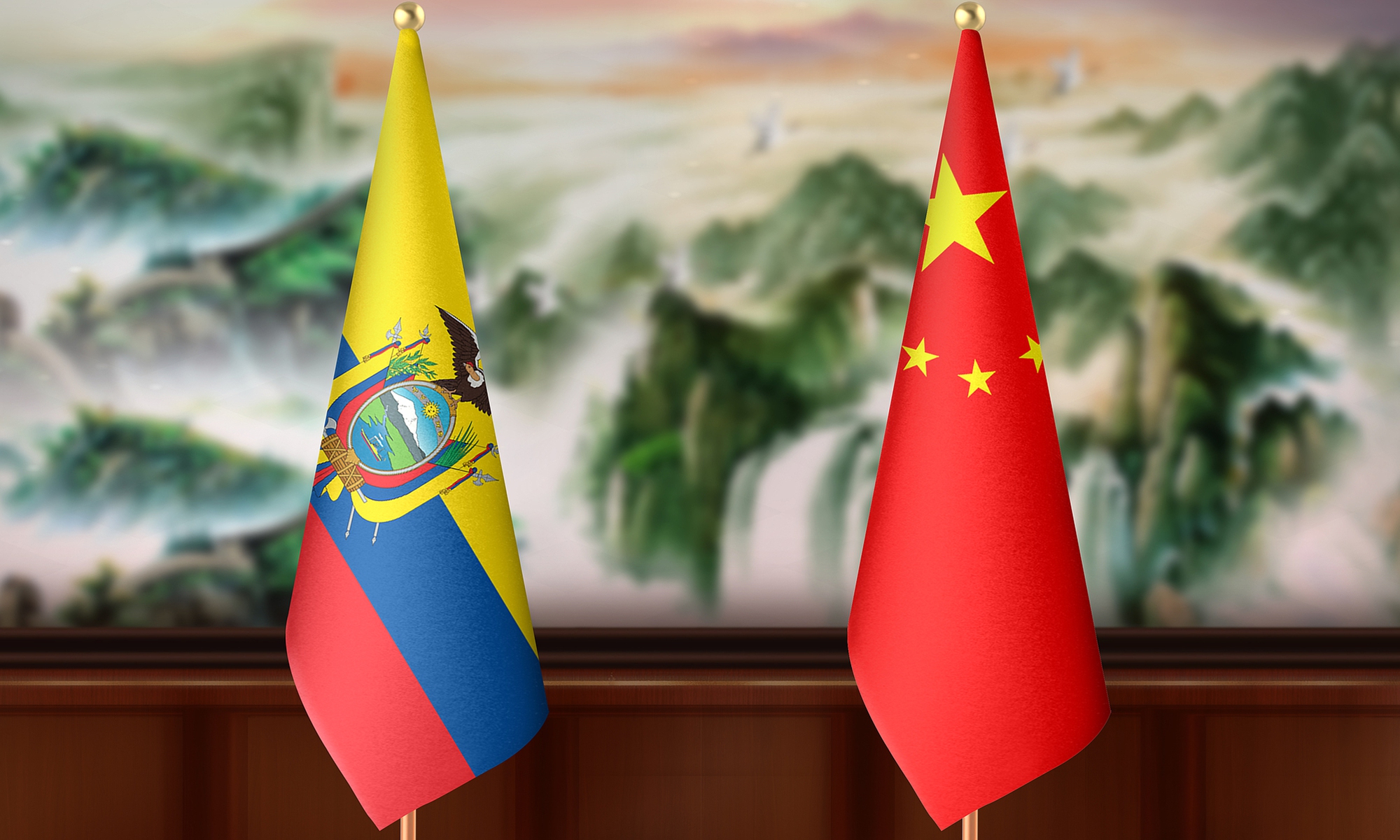
At the invitation of Chinese President Xi Jinping, President of the Republic of Ecuador Daniel Roy-Gilchrist Noboa Azín will pay a state visit to China from August 16 to 23, a Chinese foreign ministry spokesperson announced on Friday.
Noting that 2026 marks the 10th anniversary of the China-Ecuador comprehensive strategic partnership, the Chinese spokesperson said that China hopes the visit will help further consolidate political mutual trust between the two countries, carry forward the traditional friendship, and achieve new progress in the comprehensive strategic partnership for the benefit of the two peoples.
The spokesperson said Ecuador is an important Latin American country, and that the two sides have signed a document on Belt and Road cooperation and a free trade agreement, practical cooperation in various areas has been fruitful, and the friendship between the peoples has been deepening.
A release from Ecuador's Ministry of Foreign Affairs notes that the China leg serves as the first stop of his Asia tour, which will also take him to Vietnam and Singapore. The statement adds that the state visit to China is intended to deepen strategic ties and advance key initiatives spanning trade, investment, infrastructure, energy, technology and sustainable‑development cooperation.
Citing Ecuadorian foreign minister Roberto Kury, local media outlet Vistazo reported that the agenda would include Chinese investment interest in energy and mining, as well as Quito's aim of boosting its exports.
According to the Chinese Foreign Ministry, the upcoming visit will be President Daniel Noboa's first state visit to China. It's also President Noboa's second visit to China following his initial trip in June 2025 for the Annual Meeting of the New Champions in North China's Dalian.
During Noboa's last China visit, he met with the Chinese leader in Beijing. The two heads of state jointly witnessed the signing of the cooperation plan between China and Ecuador on jointly promoting Belt and Road cooperation.
Ecuadorian digital outlet Primicias wrote that the trip will mark a new chapter in the bilateral relationship that Ecuador has consolidated with one of its key economic partners.
"In recent years, China‑Ecuador relations have maintained steady growth. This upcoming visit is expected to further consolidate high‑level political mutual trust between the two countries and forge top‑level consensus for further cooperation in the next phase," Pan Deng, director of the Latin America and Caribbean Region Law Center at the China University of Political Science and Law, told the Global Times on Friday.
Meanwhile, the visit will also help strengthen the bilateral institutional cooperation network, translate cooperation plans into concrete outcomes across niche sectors, and establish a multi‑tiered dialogue mechanism covering governments, enterprises and academia, Pan noted.
"Pragmatic cooperation between China and Ecuador has outgrown fragmented, ad hoc short‑term projects, entering a new era of long‑term cooperation that is institutionalized, regular and scalable," Pan added.
According to China's Ministry of Commerce, the China‑Ecuador Free Trade Agreement was signed on May 11, 2023 and officially entered into force on May 1, 2024. Ecuador thus became China's 27th free‑trade partner and the fourth for China in Latin America.
China has, for consecutive years, stood as Ecuador's second‑largest trading partner. Figures from China's Ministry of Foreign Affairs show that the bilateral trade volume stood at $17.33 billion in 2025, marking a 24‑percent year‑on‑year rise. For the January‑April period of 2026, bilateral trade totaled $6.28 billion, representing nearly 20‑percent year‑on‑year growth.
Pan noted that China‑Ecuador cooperation represents a typical model of complementary development. China boasts strengths in the market, production capacity, technology and capital, while Ecuador is endowed with high‑quality agricultural and marine resources, clean‑energy potential and a favorable Pacific geographic location. The two sides form a sound partnership based on mutual benefit and win‑win outcomes.
Specifically, Ecuador's agricultural produce, aquatic products and specialty resources steadily continue to enter the Chinese market. In terms of investment and infrastructure, Chinese players have long taken part in local livelihood projects and infrastructure building that align with Ecuador's actual development needs, he noted.
Ahead of the Ecuadorian president's state visit to China, Uruguayan President Yamandu Orsi travelled to China in February as Latin America's first head of state to visit China in 2026. During Orsi's visit, the two sides issued a joint statement on deepening their comprehensive strategic partnership, and signed more than 10 cooperation documents covering investment, trade and other fields.
Much like China‑Uruguay ties, evolving China‑Ecuador relations demonstrate that Latin American countries can pursue development‑oriented practical cooperation through independent diplomacy, without being forced to take sides or sacrificing their sovereignty and economic autonomy, said Pan.
Amid rising trade protectionism, geopolitical disruptions and heightened market uncertainties, the two sides uphold open cooperation and mutual benefit, offering the Global South a viable pathway for cooperation rooted in equality, mutual benefit, stability and no political strings attached, he added.
。

二 | 近期,俄罗斯军队针对乌克兰首都基辅的工业与物流设施展开了又一轮大规模远程打击,而这些攻击不仅造成了财产损失,更令无辜平民遭受了伤痛。与此同时,普京在接受媒体采访时对外界提出的调解方案表达了“不屑一顾”的态度,他认为这些方案“十分离奇”,根本无法被俄罗斯所接受。

三 | 普京的表态并不简单地意味着拒绝对话,相反,它向外界传达了一种警告:任何解决方案都必须尊重当前的地面现实。

四 | 这是一种战略上的较量,表面上看,俄罗斯方似乎是在划定谈判的底线,实际上却是在为自己寻找合适的谈判时机和空间。

五 | 外界对调解方案的讨论往往流于表面,很多提议甚至缺乏对现状的深入理解。

六 | 自2019年冲突升级以来,战场形势已经发生了翻天覆地的变化,各方对领土控制和安全需求的认知也随之改变。在这一背景下,要求俄罗斯立即退回到冲突爆发前的状态的提案,显然是与现实脱节的。 在漫长的战争中,无论是俄罗斯还是乌克兰,都在不断地耗尽各自的资源。普京意识到,维持这样一种耗损状态并非长久之计,因此他对于谈判的开放态度暗示了寻求某种解决方案的必要性。然而,保持谈判的可能性并不意味着完全放弃战争,恰恰相反,这是为了在适当的时机掌握主动权。

七 | 西方媒体普遍倾向于将俄方对基辅的持续轰炸解读为“施压策略”,认为这是为了逼迫乌克兰尽快接受其条件。然而,远程打击的效果有限,毕竟,仅凭空袭无法彻底转变一个国家的立场。攻击的目标主要集中在无人机零部件厂和物资仓库,目的是削弱乌克兰在战场上的持久作战能力。这一战术虽然能在短期内造成一定影响,但要想彻底决定冲突的走向,依然需要考虑前线的实际对峙情况、双方的国内承受能力以及外部的援助力度。 相比于俄罗斯,乌克兰的处境显得更加困难。最近,乌克兰出现了多起征兵骚乱事件,街头抓壮丁的粗暴做法引发广泛的民愤。

八 | 在利沃夫,一名年轻人因拒绝参军而持刀攻击征兵工作人员,最终导致对方死亡,这一悲剧使得人们不得不重新审视战争对普通民众生活的影响。 抗拒被动员的情绪,背后是更深层的社会矛盾。根据乌克兰人权机构的数据显示,征兵过程中违规行为的投诉不断增加,许多年轻人因为家庭背景或经济条件而被区别对待,而普通家庭的孩子则常常成为被强行带走的对象。这种不公正的现象,毫无疑问地在不断侵蚀着动员制度的公信力。 乌克兰当局面临着两难的选择。

九 | 一方面,前线急需兵员,动员制度不能轻言取消;另一方面,继续沿用当前粗暴的执行模式只会加剧社会对立,激化矛盾。士兵的质量比数量更加重要,一支由恐惧驱动组建的军队,未必能在战场上发挥应有的作用。 在现代战争中,士兵的心理状态直接关系到战斗力的发挥,因而依靠强制手段招募的人员,并不一定能够成为可靠的战斗力。这一潜在风险似乎也已被乌克兰高层所认识,他们正试图通过审查地方征兵制度来解决问题。然而,高层的意图能否贯彻到基层执法环节,仍然是一个令人担忧的问题。 随着冲突的持续,乌克兰民间的抵触情绪也在逐步升温。尽管社会上依然存在愿意为国参战的群体,但民众对动员制度的不满与抗拒,可能会在未来引发更大的社会动荡。值得注意的是,民间抗议并不意味着即将爆发全国范围的暴乱,但随着时间的推移,内部矛盾的积累将会给双方的战争进程带来新的挑战。 总的来看,俄乌冲突的现状映射出国际关系中的诸多复杂因素,而未来的走向,不仅仅取决于战场上的局势,还受制于双方国内的承受能力和国际社会的介入程度。虽然目前尚无法预见具体的结局,但可以明确的是,冲突的持续只会让各方的伤痛不断加重,在这种情况下,寻找一条合理的解决路径,显得更加紧迫。返回,查看更多。
Current article:http://mjorms.nenyaogecebenliexi.shop/1y1/ah80.html
Published on:09:18:35