
非常静距离
河北出台自然岸线占用补偿管理办法_我的网站

A |
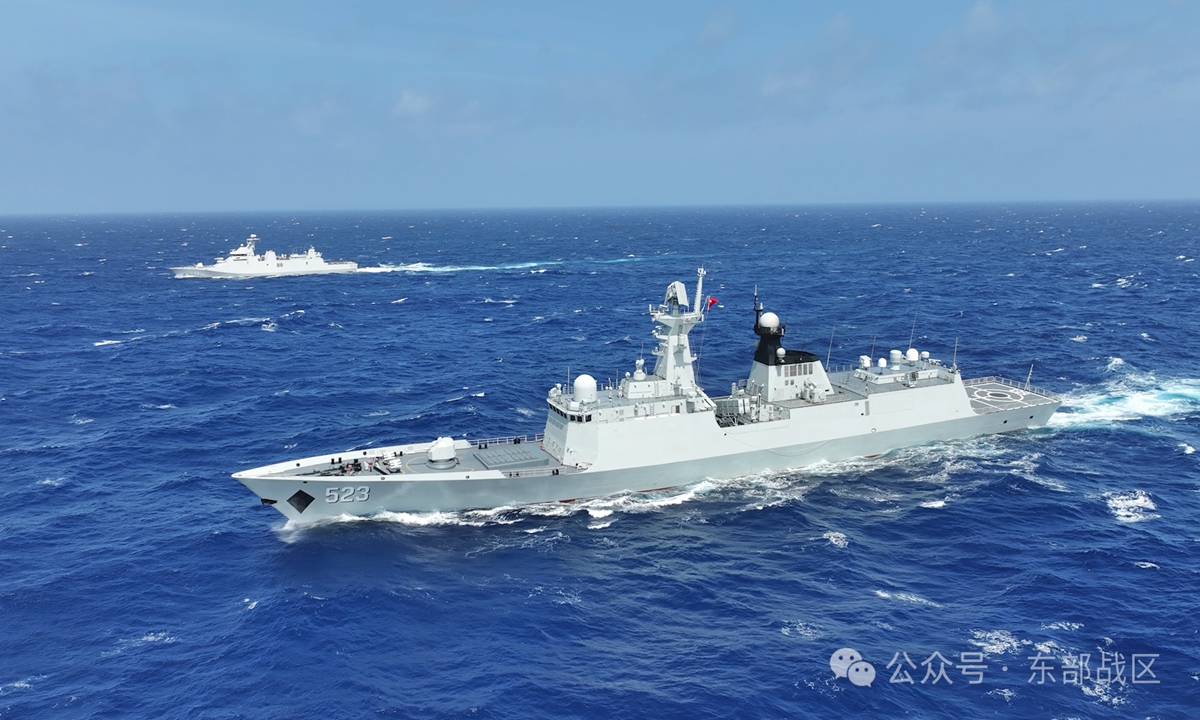
Following China's Ministry of National Defense's announcement on Tuesday that the Chinese and Indonesian navies will hold a navigation exercise in waters east of Taiwan island in mid‑August, Democratic Progressive Party (DPP) authorities on the island fiercely opposed and smeared this legitimate maritime military cooperation, while hyping up the so‑called "China threat" narrative. Their provocative response stands in stark contrast to their weak, accommodating stance toward Japan and the Philippines, whose illegal maritime delimitation in waters east of Taiwan has undermined China's legitimate maritime rights and interests.
Analysts pointed out that such reactions lay bare the DPP's secessionist mentality, its reliance on external forces to back "Taiwan independence" schemes, and its deep‑seated fear of the mainland's growing military capabilities to safeguard national sovereignty and territorial integrity.
The Chinese Navy's Honghe guided-missile frigate (Hull 523) and Indonesia's frigate KRI I Gusti Ngurah Rai completed all scheduled exercises in waters east of China's Taiwan island on Wednesday morning, concluding a joint maritime passage exercise, according to the PLA Eastern Theater Command. The two vessels conducted drills including maritime communications, formation maneuvering, replenishment at sea and a farewell ceremony, demonstrating practical cooperation and their shared commitment to regional peace and stability.
In a statement on Wednesday, the DPP authorities' "external affairs" department smeared the drill as a "malicious provocation, irresponsible unilateral act that brings unrest and threats to the region." It claimed that it would vigorously safeguard its so‑called "sovereignty" over the waters east of Taiwan island.
On Tuesday evening, the so-called Mainland Affairs Council on the island also smeared the exercises as an act "undermining regional peace and stability and challenging the international order," claiming that the exercises had seriously infringed upon its so‑called "national sovereignty" and maritime rights and interests.
Some media outlets have noted that choosing waters east of Taiwan island for the drill may relate to the Japan‑Philippines maritime delimitation issue. Observers meanwhile highlighted a stark contrast between the DPP authorities' willingness to endorse Japan and the Philippines' illegal maritime‑delimitation moves in waters east of Taiwan and their fiery rhetoric over the legitimate maritime drill between the Chinese mainland and Indonesia.
Some Taiwan‑based netizens also condemned the DPP's conduct. One user wrote beneath a Mainland Affairs Council Facebook post: "They would rather act as vassals to foreign states than let compatriots defend our maritime territory - the DPP are traitors to the nation."
"The Taiwan authorities simply have no so‑called 'national sovereignty.' Such remarks reflect the DPP authorities' secessionist ideology," said Wang Jianmin, a senior cross-Straits expert at Minnan Normal University in Fujian. He noted the stark contrast in the DPP authorities' positions also shows that they have never cared about genuine maritime rights and interests.
According to Wang, on one hand, the DPP authorities pin their hopes on external forces to back their Taiwan secession schemes and choose to compromise and yield on actual maritime interests. On the other hand, they deliberately fabricate the narrative of "the Chinese mainland unilaterally changing the status quo," in a bid to garner more attention and support for external forces.
In addition, as local elections on the island draw near, the DPP authorities seek to hype up the so‑called "military threat from the mainland" rhetoric, stoke anti‑mainland sentiment on the island and shift blame for various livelihood‑related social problems against the DPP, Wang noted.
Since June this year, China Coast Guard (CCG) vessels have conducted regular law-enforcement patrols in waters east of Taiwan island, with the aim of exercising jurisdiction in accordance with the law and safeguarding China's territorial sovereignty and maritime rights and interests. The patrol came in response to Japan-Philippines' unilateral announcement of so-called "maritime delimitation negotiations" concerning waters east of Taiwan island in May, according to CCG's statement.
Previously, the PLA Eastern Theater Command conducted joint exercises codenamed "Justice Mission 2025" in the Taiwan Straits and in waters to the north, southwest, southeast, and east of the island.
For a long time, secessionists have clung to the illusion that the waters east of Taiwan island serve as a "security buffer zone," from which outside forces could intervene in the Taiwan Straits from this direction, said Wang.
"However, the China-Indonesia naval drill in the waters east of Taiwan island further shatters secessionists' illusions," Wang said. "It demonstrates China's firm stance in safeguarding national sovereignty and territorial integrity, and constitutes a stern warning to secessionists and external forces."
According to the expert, the reaction of the DPP authorities also lays bare the deep‑seated fear harbored by secessionists.
"They are acutely mindful of the real possibility that the Chinese mainland may impose maritime containment around Taiwan island when necessary… Confronted with this scenario, the DPP authorities resort to nothing but loud rhetoric and empty posturing, which fully exposes the true nature of Taiwan secessionists: feigning ferocity while being fundamentally feeble and helpless," Wang said.
。

B | 我省出台自然岸线占用补偿管理办法生态岸线占用与补偿长度比例不低于一比一点一日报讯(苑立立、宋海娟)为加强海岸线保护利用管理,提升海洋生态质量,近日,省自然资源厅出台《省自然岸线占用补偿管理办法》(以下简称《办法》),对全省自然岸线保有率管控目标、占用补偿比例、修复质量、补偿方式、方案编制与审查、实施认定、日常监管等作出系统规定。省拥有487公里的大陆海岸线,承载着渤海湾重要的生态功能,也是全省沿海经济发展的黄金地带。

C | 随着省海洋经济快速发展,海岸线开发利用需求渐趋增大。受项目用海选址条件所限,占用自然岸线的情形难以完全避免。沿海开发与生态保护如何统筹兼顾,《办法》提供了制度层面的操作依据。

D | 根据《办法》,全省自然岸线保有率不低于国家下达的省级管控目标,沿海设区的市自然岸线保有率不低于省分解下达的市级管控目标。用海项目因围填海、构筑物建设等占用自然岸线(含生态恢复岸线)时,要通过“整治修复形成生态恢复岸线”或“购买自然岸线指标”等方式,实现“占补平衡”、确保区域自然岸线保有率不降低。“补多少”是核心问题。在补偿比例方面,《办法》实行差异化自然岸线占用标准。项目所在沿海设区的市自然岸线保有率不低于管控目标的,按照占用与补偿长度不低于1:1.1的比例进行补偿;低于管控目标的,按照不低于1:1.2的比例进行补偿。此外,用海项目占用岸线后新形成人工岸线长度大于占用长度,导致所在沿海设区的市自然岸线保有率降低的,应进行补偿,确保所在沿海设区的市自然岸线保有率不降低。

E | 补偿怎么补,关键在科学合理。《办法》提出,省坚持“占优补优”原则,修复的生态恢复岸线质量不得低于占用自然岸线质量。占用砂质岸线的,必须补偿为砂质岸线;占用基岩岸线的,可补偿为砂质或基岩岸线;占用泥质岸线的,可补偿为砂质、基岩或泥质岸线。在其他情况下,也可补偿为生态化海堤等生态恢复岸线。占用自然岸线可采取项目用海范围修复、本市异地修复和购买自然岸线长度指标等多种方式补偿。此外,《办法》规定,项目占用自然岸线补偿方案原则上应在项目开工建设起一年内实施完成,特殊情况经批准最多可延长一年。海岸线修复应当符合国家和省规定的标准,修复完成后落实生态恢复岸线认定责任。

F | 省自然资源厅组织开展生态恢复岸线专家认定评审。未通过认定或认定长度低于应补偿长度的,责令限期整改。《办法》还明确,自然岸线保有率高于省下达管控目标的沿海设区的市,其超出部分的自然岸线(含生态恢复岸线)长度可用于指标交易。同时,强化日常巡查与执法监管,沿海县级以上自然资源(海洋)主管部门要定期巡查监测,及时发现、制止、查处违法占用和损害自然岸线的行为,并依法依规处置到位。

G |
Current article:http://mjorms.nenyaogecebenliexi.shop/nyvd/3v0lw9.html
Published on:16:00:44
 りくりゅうペアが選んだポケモンキャラ まさかのお揃いに木原「えっ!?」ほっこりやり取りが「反則すぎ」「どこまでも仲良い」「もう全部あげちゃう笑」JOC公開で反響
 夏天什么时候能到?本周末和假期里的天气好坏参半
 华泰证券港股策略:金融和AH溢价仍有改善空间
 中央控制屏幕太大了,好像在电影院里!从CES 2019看汽车的未来趋势
 【收评】锰硅日内上涨0.44%机构称锰硅上行驱动不足,短期期价震荡运行
 “油菜花田”播种忙
- ·三人篮球奥运季军成员王丽丽:巴黎奥运 想把铜牌换金牌
- ·台风登陆前后,杭州风雨交加 白堤上被风吹坏的雨伞装满了一车
- ·《泉州市传承弘扬创新发展“晋江经验”条例》8月20日起施行
- ·7년 만에 가장 큰 아이 울음소리…출산율 0.9명대 회복하나
- ·Swati granted bail in controversial tweets case
- ·「独島」広報大使の歌手、「竹島の日」行事に合わせた日本入国拒否される…韓国で交錯する「日本批判」と「冷ややかな反応」
- ·AUDI纯电车没有四个圈消费者还买账吗?上汽奥迪高管回应
- ·Filing period for New Hampshire presidential primary opens
- ·武契奇称科索沃当局增加北部军事存在,警告武装冲突危险临近_乌方:乌军已突破至乌俄边境地区_胡锡进谈俄军哈尔科夫地区失利
- ·कानपुर में जीटी रोड पर जलभराव और गड्ढे, मेट्रो के डिवाइडर तोड़ दिला रहे समस्या से निजात
- ·奕境曾清林谈“汽车召回”:是一个市场成熟的标志,但长期被误解成 " 质量不行 " 代名词
- ·IMF:美国赤字对全球经济构成“重大风险”
- ·Indian Navy's MiG 29K crashes off Goa
- ·Ganesh Chauth 2025: इस बार भी न हो पाई गणपति बप्पा की ‘रिहाई’... तारीखों में उलझी मुक्ति, कैसे मिटे विघ्न
- ·从投资热土到产业高地——天津经开区围绕产业链“筑基、强链、育新”,从投资热土到产业高地——天津经开区围绕产业链“筑基、强链、育新”
- ·土以关系升温或难持久
- ·世界羽联最新排名:凡晨组合女双第一 陈雨菲女单第三
- ·民建济南市第十三次代表大会开幕
- ·走进“七夕赴佳约·汉东觅知音”青年人才联谊活动
- ·新易盛:2026年半年度净利润同比增长90.98%
- ·12306:从未授权第三方平台发售火车票
- ·望花区:做大做强民营经济 高质量发展活力澎湃
- ·一天内两次被传唤后,尹锡悦律师团终于建好了?
- ·"현대차 총주주환원율 35% 이상...최소배당금 1만 원"
- ·Exclusive: PLA keeps full tracking, surveillance as Philippines draws in external forces to organize so-called joint patrols in South China Sea: source
- ·下届世界杯国足有希望吗?
- ·商务部:一季度以旧换新商品网络销售额增长超过一倍
- ·什么是“老庄股”,为何要回避?| 1211 张博划重点
- ·関東各地で山火事相次ぐ 自衛隊ヘリなどが消火活動 栃木・鹿沼市 茨城・常陸太田市 ともに未だ延焼続く 神奈川・小田原市 鎮圧も消防隊員1名が体調不良で緊急搬送
- ·小米印度总监称赞中国的高速铁路:如果它在印度推出,城市间旅行将是一个新的。
- ·欧冠新军沙巴巴库2017年才建队,连闯四轮资格赛晋级正赛
- ·金洸华溪山禾玺:百万方水岸住区,以精工美学重塑龙华人居新标杆
- ·本地上周通报187起骨痛热症病例 今年首次低于200起
- ·追觅宣布聚焦四大主营业务方向:继续以人工智能、机器人和智能制造为重要技术驱动力
- ·荧屏述初心 福彩绽芳华 泰州泰兴两名福彩站主亮相全国福彩直播
- ·杭州PP市场多数价格走跌
- ·中国地震局迅即开展四川宜宾市长宁县4.7级地震应急处置工作
- ·智米高ZIMIGOAR游戏旗舰店没货不退款
- ·Video of Naked Hunter Biden Drinking Booze & Smoking ‘Drugs’ at Wellness Center Revealed to Public
- ·球探认可湖人休赛期操作:围绕卢卡打造均衡舰队